




New Technology for Generating Human Trophoblast Stem Cells from Late-Gestation Placentas
-Providing a Platform for Studying Preeclampsia and Other Pregnancy Complications-
Akira Oike#, Eri H Kobayashi#, Yasuhiro Yamamoto#, Hirotaka Hamada, Sota Takahashi, Takanori Shimizu, Akane Kitamura, Asato Sekiya, Norio Kobayashi, Shun Shibata, Shun Endo, Tetsuya Sato, Naoto Kubota, Chie Kikutake, Mikita Suyama, Takahiro Arima*, Hiroaki Okae*.
Title: Development of a robust method to derive human trophoblast stem cells from late-gestation placentas and its application to preeclampsia.
Journal: PNAS. 2026; 123(24):e2537884123.
DOI: 10.1073/pnas.2537884123
Key Points
・In 2018, our research group reported the establishment of human trophoblast stem cells (hTSCs) from early gestation placentas.
・In this study, we developed a new method to efficiently generate hTSCs from late gestation placentas.
・Using this approach, we established hTSCs from placentas of patients with preeclampsia and successfully reproduced key aspects of the disease in vitro.
Summary
The research group led by Professor Hiroaki Okae at the Institute of Molecular Embryology and Genetics, Kumamoto University, in collaboration with the research groups of Visiting Professor Takahiro Arima at the Graduate School of Medicine, Tohoku University, and Professor Mikita Suyama at the Medical Institute of Bioregulation, Kyushu University, has developed a novel technique for efficiently generating human trophoblast stem cells (hTSCs) from late gestation placentas. Furthermore, using this technology, the researchers established hTSCs from placentas of patients with preeclampsia and successfully reproduced key aspects of the disease in vitro. The study was published in the Proceedings of the National Academy of Sciences of the United States of America (PNAS) on June 11, 2026.
Background
The placenta is an essential organ for mammalian development, supplying oxygen and nutrients to the developing fetus. Trophoblast cells, the major cellular component of the placenta, play central roles in placental development and function. Abnormalities in trophoblast cells have been implicated in various pregnancy complications, including miscarriage, fetal growth restriction, preterm birth, and preeclampsia. However, the mechanisms underlying these disorders remain poorly understood, partly due to the lack of suitable experimental models.
In 2018, we reported a method for deriving hTSCs from preimplantation embryos and first-trimester placentas (Cell Stem Cell, 2018). Because hTSCs possess self-renewal capacity and can differentiate into all trophoblast lineages, they provide an excellent model for studying human placental development and function. However, the inability to efficiently derive hTSCs from late gestation placentas has greatly limited their application to the study of pregnancy complications.
In the present study, we focused on the observation that cells from late gestation placentas exhibit features of senescence. By introducing factors that suppress cellular senescence together with the stemness-associated gene SALL4, and by transiently inhibiting a group of genes that restrict cell proliferation, we successfully established hTSCs with normal karyotypes from late gestation placentas (Figure 1). These hTSCs retained proliferative and differentiation capacities comparable to those of hTSCs derived from first-trimester placentas.
Using this method, we established hTSC lines from placentas obtained from ten patients with preeclampsia. Analysis of these patient-derived hTSCs revealed impaired trophoblast invasion. This finding is consistent with a hallmark of preeclampsia, in which trophoblast cells fail to adequately invade maternal blood vessels. We also observed reduced secretion of placental growth factor (PGF), a key angiogenic factor produced by the placenta, thereby reproducing some of the abnormalities observed in patients.
Preeclampsia is a pregnancy complication characterized by maternal hypertension and organ dysfunction, and it is associated with adverse outcomes for both mothers and babies. Despite its clinical importance, many aspects of its pathogenesis remain unclear, and effective treatments are still limited. The hTSC derivation technology developed in this study is expected to facilitate investigations into the causes of preeclampsia and other pregnancy complications and to accelerate the development of novel therapeutic strategies (Figure 2).
Acknowledgements
This work was supported by the Research for Inter-University Research Network for High Depth Omics Program at the Institute of Molecular Embryology and Genetics (IMEG), Kumamoto University, and by the MEXT Promotion of Development of a Joint Usage/Research System Project: Coalition of Universities for Research Excellence Program (CURE) (Grant Number JPMXP1323015486). This study was also supported by grants from the Japan Agency for Medical Research and Development (AMED), the Japan Society for the Promotion of Science (JSPS), the Joint Usage/Research Center Program, the Uehara Memorial Foundation, the Takeda Science Foundation, and Daiichi Sankyo Foundation of Life Science. The authors also sincerely thank the participating medical institutions and study participants who donated placental samples for this research.
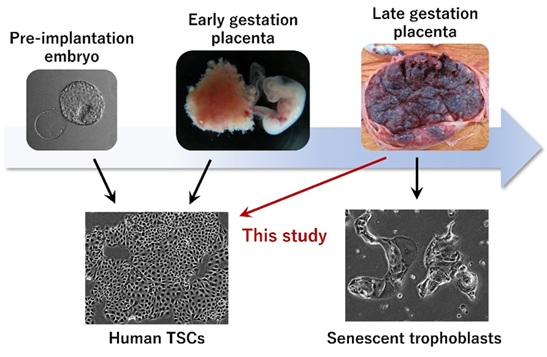
Figure 1. Establishment of human trophoblast stem cells (hTSCs) from late gestation placentas
Efficient generation of hTSCs from late gestation placentas has been challenging. In this study, we introduced factors that suppress cellular senescence together with the stemness-associated gene SALL4 into late gestation placental trophoblast cells. In addition, we transiently inhibited a group of genes that restrict cell proliferation. This combined approach enabled the efficient establishment of hTSCs from late gestation placentas.
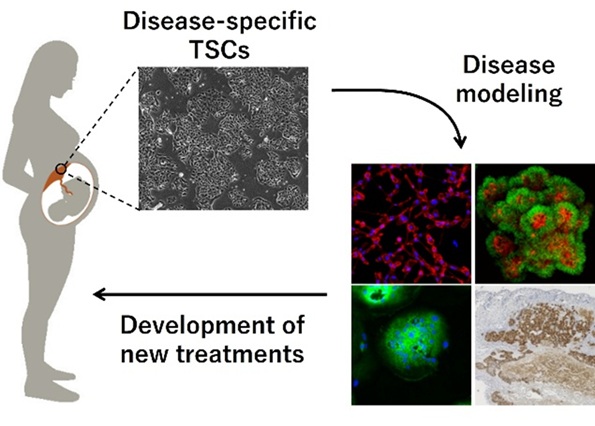
Figure 2. Potential applications of hTSCs in the study of pregnancy complications
The technology developed in this study enables the establishment of disease-specific hTSCs from placentas of patients with pregnancy complications. These cell lines are expected to provide a valuable platform for investigating the mechanisms underlying pregnancy disorders and for developing novel therapeutic strategies.


